 Internal
 Online courses
 Local: Preuniversity courses
 WebMail
 Repository
Institute of Criminal Law
Institute belonging to
School of Law and Social Sciences
Presentation
The Institute of Criminal and Procedural Law is presented as the academic field within the Universidad de Mendoza whose main objective lies in the investigation of relevant legal aspects in criminal matters and criminal procedure.
Fundamentally, the Institute promotes the study and knowledge of topics of current interest not only for legal-criminal dogmatics, but also for society in general, thus seeking progress in scientific development with social relevance.
Well, there is no doubt about the social significance that numerous issues that belong to the branch of Criminal Law have had in recent times. To do this, it is enough to observe the large number of events that are linked to our subject and seriously awaken the attention of citizens in general (e.g. corruption crimes, acts of gender violence, drug trafficking, human trafficking, criminal responsibility of minors, people in a situation of confinement, trial by jury, issuance of life sentences, etc.).
Now, it should be highlighted that the study of the topics addressed is not only focused from the perspective of academic and social interest, but also from a practical point of view, trying to obtain useful results for judicial operators in general (litigation lawyers as employees, officials and magistrates of the Judiciary and the Public Prosecutor's and Defense Ministries).
Authorities
Dr. Juan Ignacio Pérez Curci
Director
Amparo Giuffré
Central Campus Secretary
Ivan Abalos
Central Campus Secretary
Ladislao Ábalos
Campus Secretary San Rafael
MISSION
Within the framework of research activities, the Institute carries out discussion and debate meetings, aimed at exchanging opinions and ideas, with the aim of enriching knowledge of the study topics for the study. At the same time, meetings, conferences and courses are promoted and organized with the purpose of training in various current and relevant topics in criminal and procedural matters.
It should also be noted that the Institute seeks to connect the School's undergraduate and graduate students in the different research, study and training activities, with the aim of contributing to their academic training.
VISION
Through the Institute of Criminal Law and Criminal Procedure, we will seek to understand the importance of criminal law due to the sensitivity of the legal consequences that it entails, both from the perspective of the new role that the victim acquires in the criminal process, and from a primarily social vision. As well as from the perspective of rights and guarantees of people subjected to criminal proceedings.
OBJECTIVES
Each and every one of the activities undertaken by the Institute of Criminal and Procedural Law aims to promote the strengthening of the Rule of Law and Justice in our society. As well as trying to achieve, through the study and development of criminal dogmatics, greater rates of predictability and legal security in the application of criminal law by the various legal operators.
CONTACT
Institute email: institute.penal@um.edu.ar
School of Law and Social Sciences, Universidad de Mendoza, Central Campus.
MEMBERS
Dr. Shirley Olmedo Roa
Dr. Sara Portabella
Dr. María de Lourdes Bataggion
Dr. Gonzalo Nazar
Dr. Carlos De Casas
Dr. Alejo Amuchástegui
Dr. Santiago Bahamondes
Dr. Gonzalo Gassul
Dr. Fernando Freddi
Dr. Mariano Ciullini
Dr. Ezequiel Bustos
Dr. Esteban Faoro
Dr. Sebastian Sarmiento
Dr. Emilio Baez
Lawyer Manuel Carballo Robello
Those who are interested or wish to be part of the Institute of
Criminal Law in some way or in a particular project, please contact us through: institute.penal@um.edu.ar
LINES OF INVESTIGATION
- Research project: “Human dignity: starting point for the study of various institutes of criminal and procedural law.”
- Objectives (general and specific) and justification of research interest: In this research work, different aspects of criminal law and criminal procedure will be addressed that, for various reasons, are of current interest, focusing on human dignity as a starting point for its analysis and discussion. Thus, the following will be analyzed: 1) philosophical aspects and legal-criminal dogmatics; 2) aspects linked to the criminal process and 3) aspects related to the execution of custodial sentences. It happens that, currently, one of the main purposes assigned to criminal law, especially in public opinion, is the avoidance of impunity. As Jesús María Silva Sánchez explains, this modification has broken basic political-criminal principles. Therefore, it is essential to start from a strong idea of human dignity, operational so that criminal law and criminal procedural law have a human orientation that allows limits and restrictions to be assumed on the exercise of state punitive power. In times in which criminal prosecution appears as an oversized tool to solve all kinds of social conflicts, we understand that human Dignity must play a central role. The study and analysis of this subject aims to provide not only an extremely interesting view of the topics addressed, but also of great benefit to academia and the practical field.
- Research team currently in charge: Dr. Juan Ignacio Pérez Curci, Dr. Amuchástegui Alejo, Ezequiel Bustos, Amparo Giuffré, Ladislao Abalos, Shirley Roa, Fernando Freddi, Dr. Mariano Ciullini, Emilio Báez.
- Graduate students and invited researchers participating (if any): Juan Agustín Robello.
ACTIVITIES
- Between the months of August and November 2019, the Institute organized meetings in which various topics related to public corruption crimes were presented and debated. The topics were chosen based on the relevance and interest they aroused for legal-criminal dogmatics, as well as for presenting quite novel aspects that motivated their analysis and reflection. The meetings began with talks in which the speakers shared a series of knowledge acquired through their research on the subject, then opening space for questions and the exchange of ideas between the participants.
- The first began on August 9, 2019, Dr. Alejo Amuchástegui spoke about “Criteria for charging in public corruption crimes. An approximation".
- After that, on August 30, 2019, Dr. Santiago Bahamondes gave his presentation on “Irritated res judicata and imprescriptibility in cases of corruption".
- Later on September 27, 2019, Dr. Carlos Parma spoke about his work entitled “The anti-corruption pentagon: criminal law as an effective instrument for preventing and combating organized crime and corruption of officials".
- Finally, on October 18, 2019, Dr. Mateo Bermejo spoke about “Compliance and Corruption. Its projection in the public sphere".
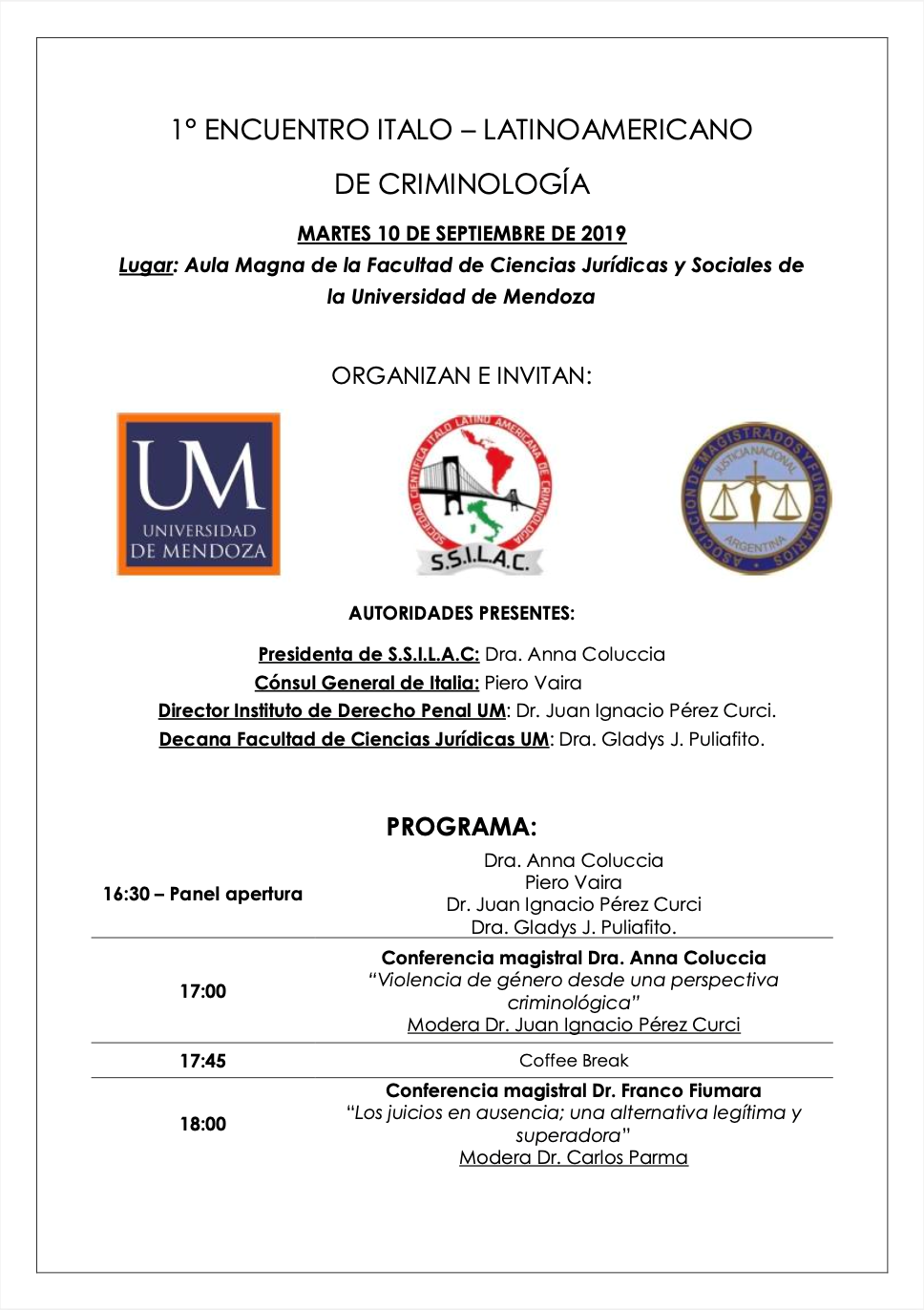
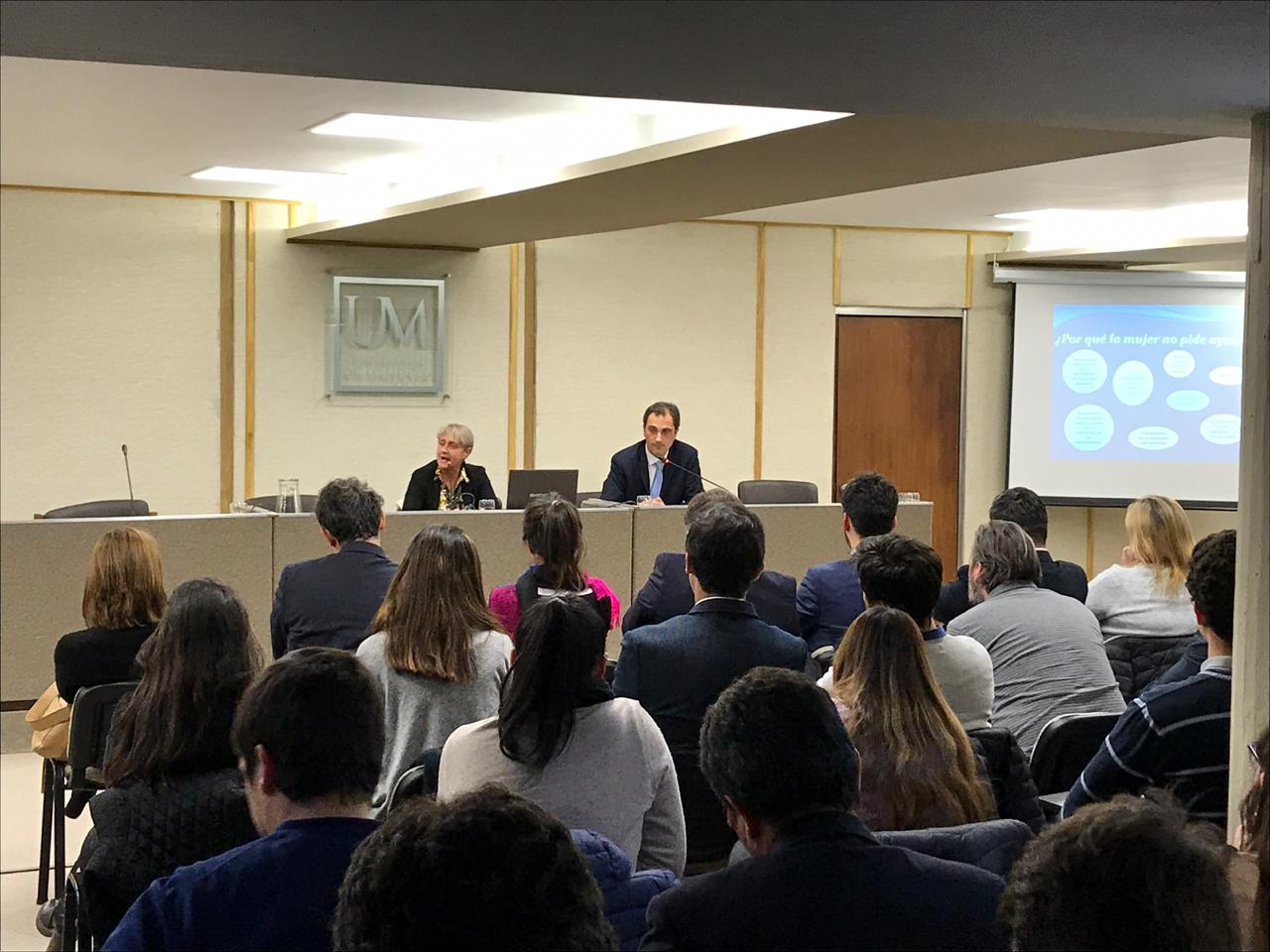
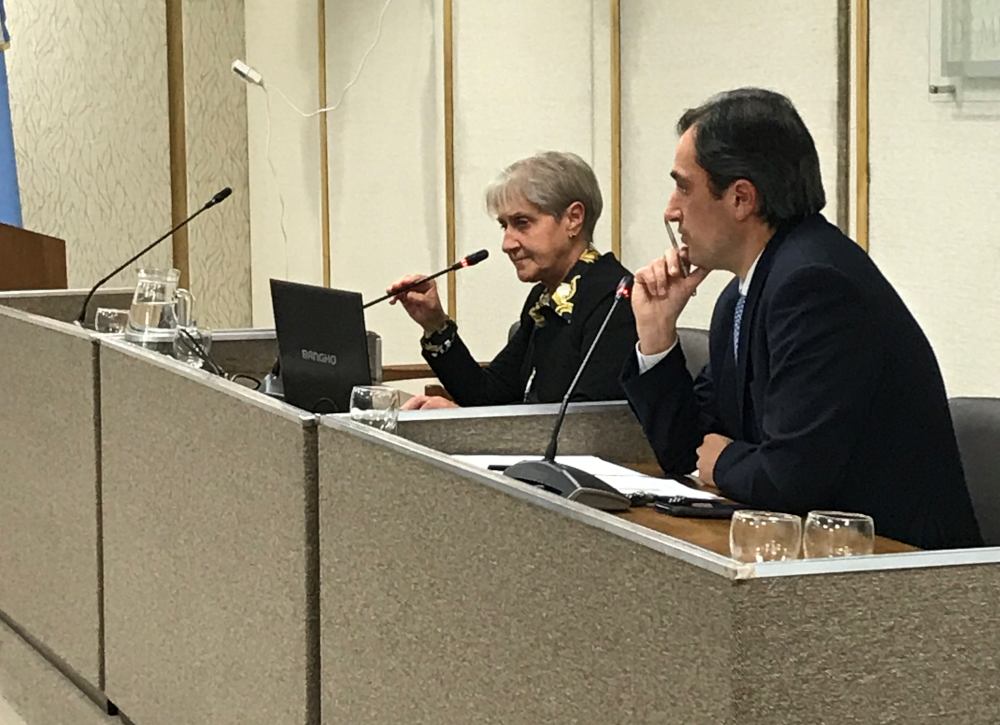
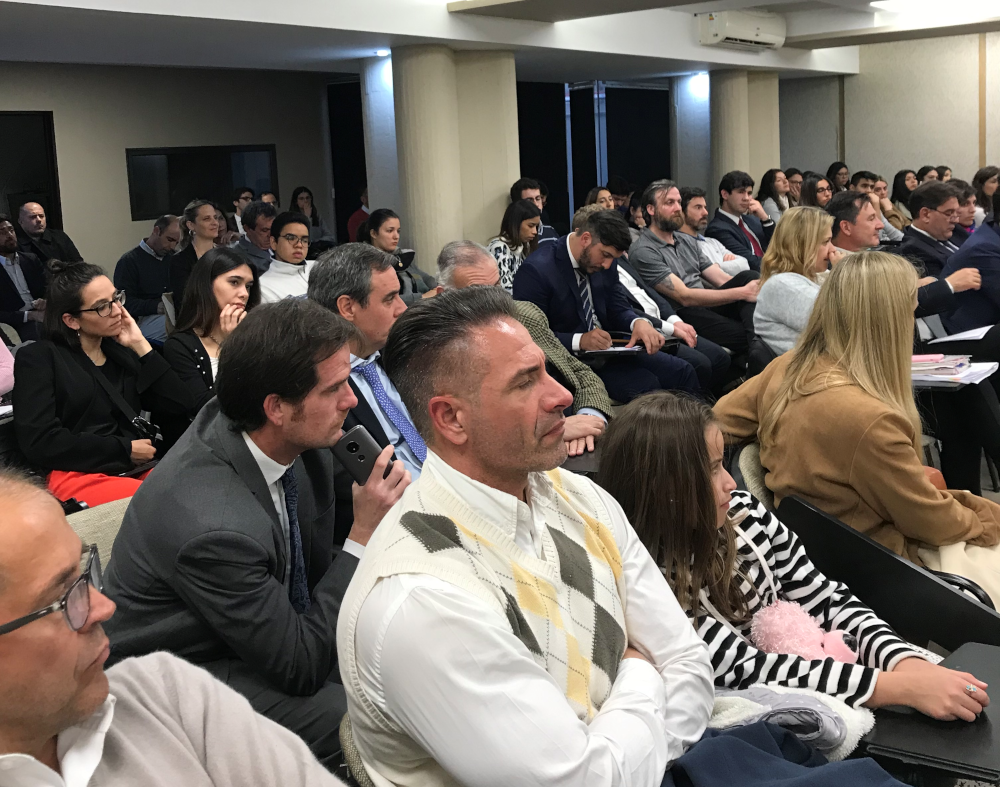
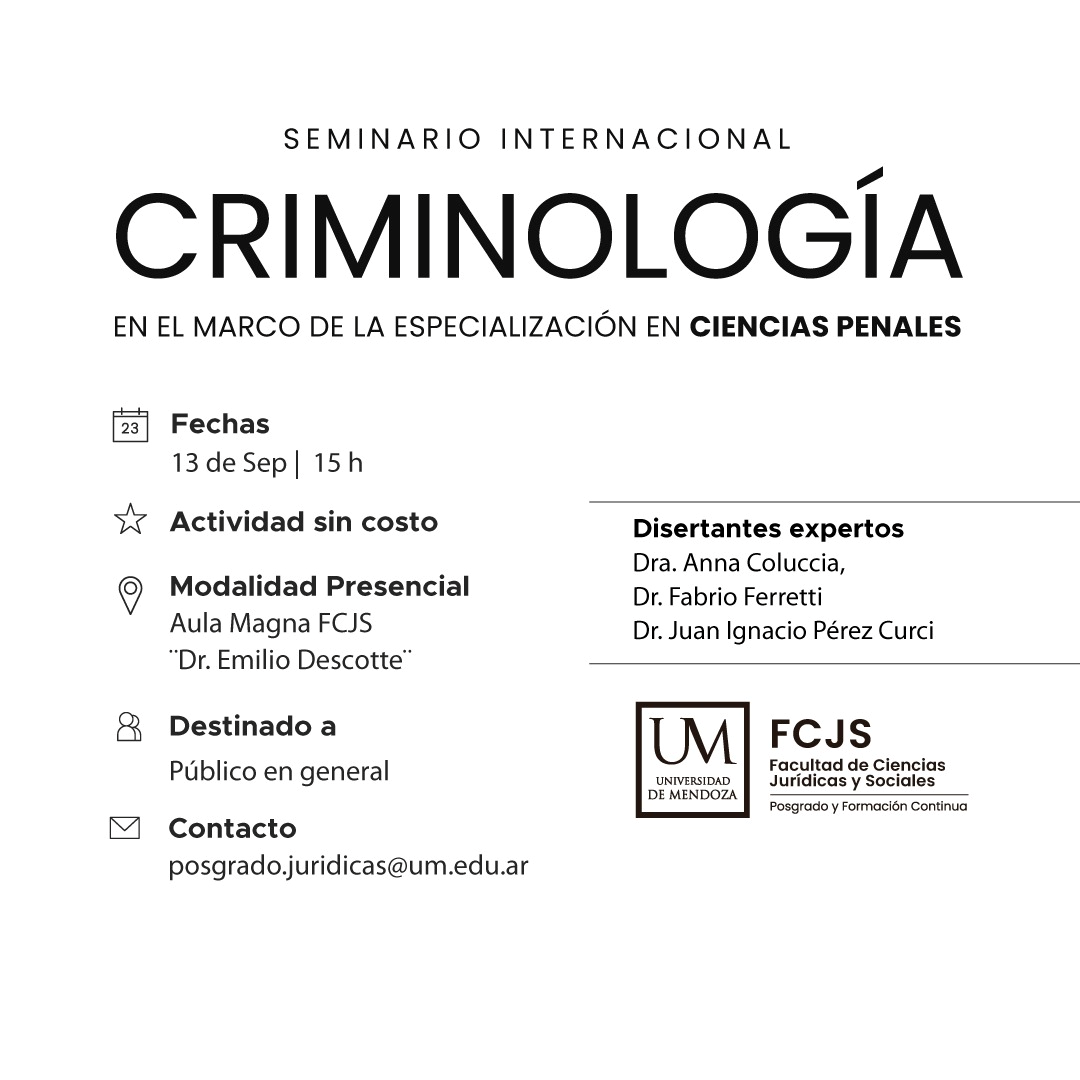
- Also on September 10, 2019, the first meeting was held: ITALO-LATIN AMERICAN CRIMINOLOGY. It took place in the main classroom of the School of Law and Social Sciences of the Universidad de Mendoza. It was attended as speakers by the president of SSILAC, Mrs. Anna Coluccia, the Consul General of Italy Piero Vaira, Dr. Juan Ignacio Perez Curci as well as Dr. Gladys J. Puliafito. On that occasion, “Gender violence from a criminological perspective” was analyzed, as well as “Trials in absentia; a legitimate and superior alternative.”
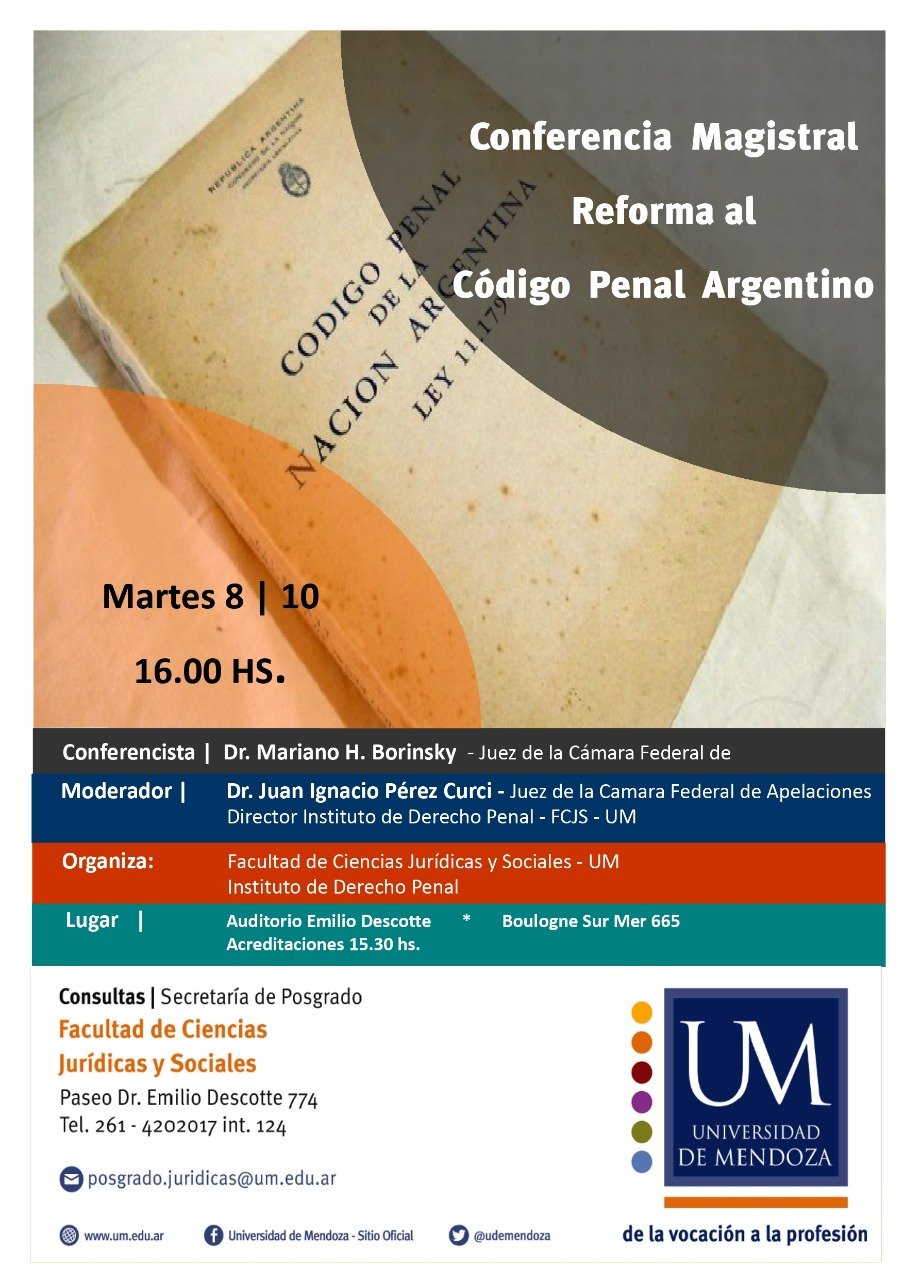
- On Tuesday, October 08, 2019, the “Master Conference on reform of the Argentine Penal Code” by Dr. Mariano H. Borinsky (Judge of the Federal Chamber of Criminal Cassation and President of the Commission to reform the National Penal Code). The event was organized by the Institute of Criminal Law of the University and took place in the Aula Magna of the School of Law and Social Sciences of the Universidad de Mendoza, with the attendance of a large number of students (undergraduate and postgraduate), professors, magistrates and lawyers from the local jurisdiction. The day began with a few words of introduction and welcome by Dr. Juan Ignacio Pérez Curci and then Dr. Borinsky gave a conference in which he addressed the most important points of the Reform Project to the Argentine Penal Code, analyzing - among others - the following topics: insecurity, corruption, drug trafficking, public safety, corporate responsibility, terrorism, environmental crimes, cybercrimes, abortion, road tragedies, crimes against the dignity of workers, against humanity, early confiscation of assets. After this presentation, space was opened for questions and personal reflections from the listeners regarding the topics addressed in the conference.
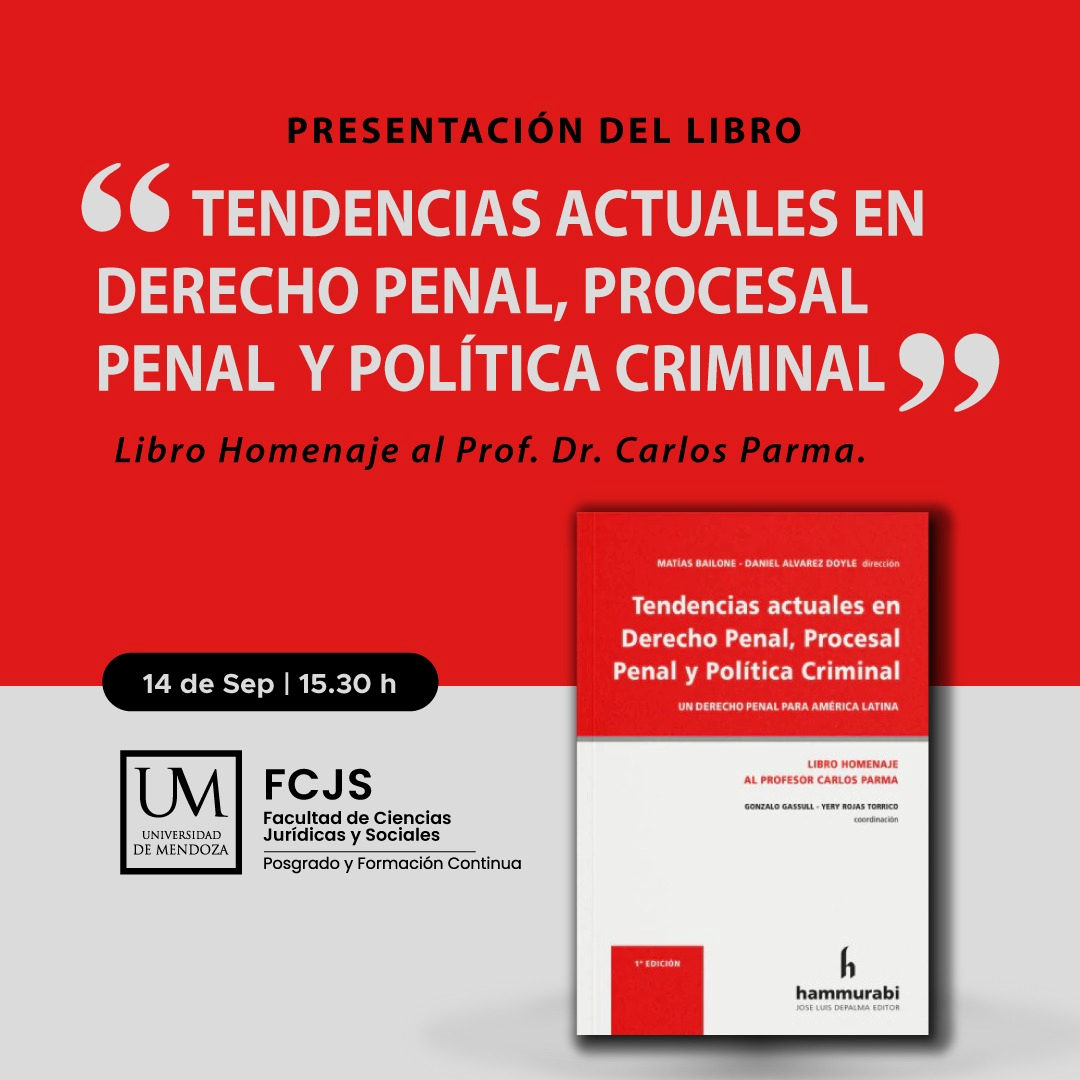
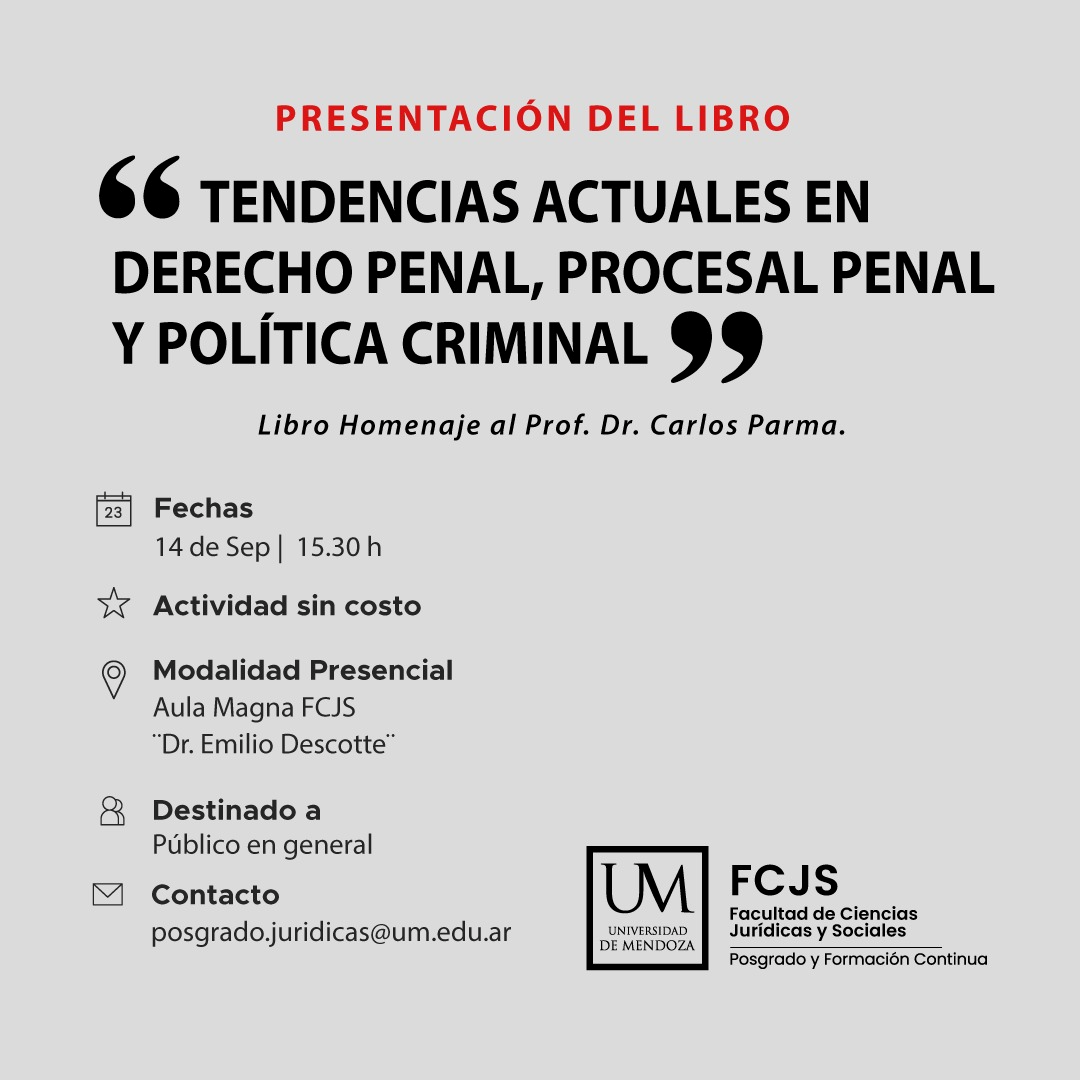
- September 14, 2023, presentation of the book tribute to Professor Dr. Carlos Parma “Current trends in Criminal Law, Criminal Procedure and Criminal Policy”, from Hammurabi publishing house.
Research days:
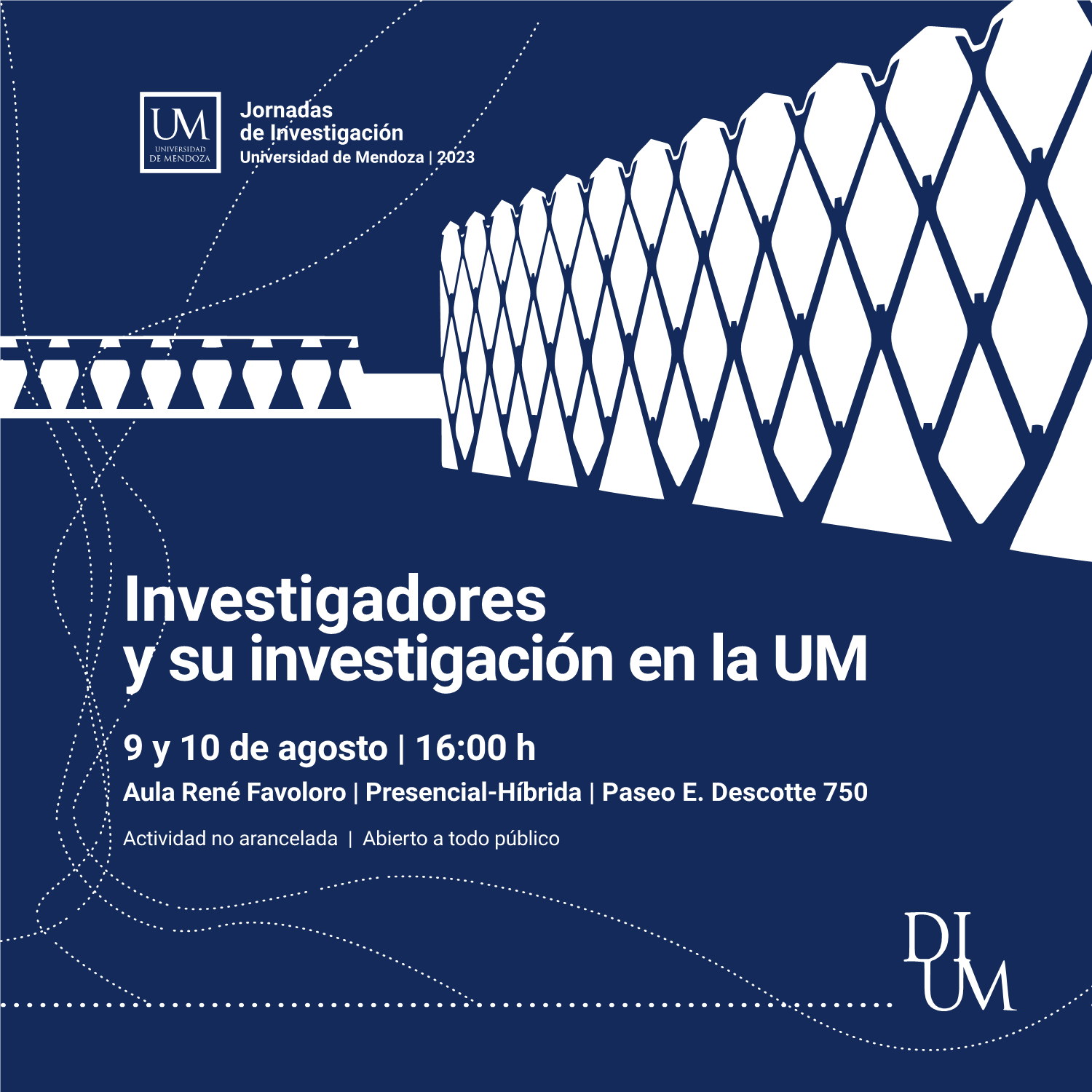
- Presentation of the Human Dignity research project at the research conferences organized by the DIUM on August 09, 2023.
PUBLICATIONS
Within the framework of research activities, the Institute carries out discussion and debate meetings, aimed at exchanging opinions and ideas, with the aim of enriching knowledge of the study topics for the study. At the same time, meetings, conferences and courses are promoted and organized with the purpose of training in various current and relevant topics in criminal and procedural matters.
It should also be noted that the Institute seeks to connect the School's undergraduate and graduate students in the different research, study and training activities, with the aim of contributing to their academic training.
Through the Institute of Criminal Law and Criminal Procedure, we will seek to understand the importance of criminal law due to the sensitivity of the legal consequences that it entails, both from the perspective of the new role that the victim acquires in the criminal process, and from a primarily social vision. As well as from the perspective of rights and guarantees of people subjected to criminal proceedings.
Each and every one of the activities undertaken by the Institute of Criminal and Procedural Law aims to promote the strengthening of the Rule of Law and Justice in our society. As well as trying to achieve, through the study and development of criminal dogmatics, greater rates of predictability and legal security in the application of criminal law by the various legal operators.
Institute email: institute.penal@um.edu.ar
School of Law and Social Sciences, Universidad de Mendoza, Central Campus.
Dr. Shirley Olmedo Roa
Dr. Sara Portabella
Dr. María de Lourdes Bataggion
Dr. Gonzalo Nazar
Dr. Carlos De Casas
Dr. Alejo Amuchástegui
Dr. Santiago Bahamondes
Dr. Gonzalo Gassul
Dr. Fernando Freddi
Dr. Mariano Ciullini
Dr. Ezequiel Bustos
Dr. Esteban Faoro
Dr. Sebastian Sarmiento
Dr. Emilio Baez
Lawyer Manuel Carballo Robello
Those who are interested or wish to be part of the Institute of
Criminal Law in some way or in a particular project, please contact us through: institute.penal@um.edu.ar
- Research project: “Human dignity: starting point for the study of various institutes of criminal and procedural law.”
- Objectives (general and specific) and justification of research interest: In this research work, different aspects of criminal law and criminal procedure will be addressed that, for various reasons, are of current interest, focusing on human dignity as a starting point for its analysis and discussion. Thus, the following will be analyzed: 1) philosophical aspects and legal-criminal dogmatics; 2) aspects linked to the criminal process and 3) aspects related to the execution of custodial sentences. It happens that, currently, one of the main purposes assigned to criminal law, especially in public opinion, is the avoidance of impunity. As Jesús María Silva Sánchez explains, this modification has broken basic political-criminal principles. Therefore, it is essential to start from a strong idea of human dignity, operational so that criminal law and criminal procedural law have a human orientation that allows limits and restrictions to be assumed on the exercise of state punitive power. In times in which criminal prosecution appears as an oversized tool to solve all kinds of social conflicts, we understand that human Dignity must play a central role. The study and analysis of this subject aims to provide not only an extremely interesting view of the topics addressed, but also of great benefit to academia and the practical field.
- Research team currently in charge: Dr. Juan Ignacio Pérez Curci, Dr. Amuchástegui Alejo, Ezequiel Bustos, Amparo Giuffré, Ladislao Abalos, Shirley Roa, Fernando Freddi, Dr. Mariano Ciullini, Emilio Báez.
- Graduate students and invited researchers participating (if any): Juan Agustín Robello.
- Between the months of August and November 2019, the Institute organized meetings in which various topics related to public corruption crimes were presented and debated. The topics were chosen based on the relevance and interest they aroused for legal-criminal dogmatics, as well as for presenting quite novel aspects that motivated their analysis and reflection. The meetings began with talks in which the speakers shared a series of knowledge acquired through their research on the subject, then opening space for questions and the exchange of ideas between the participants.
- The first began on August 9, 2019, Dr. Alejo Amuchástegui spoke about “Criteria for charging in public corruption crimes. An approximation".
- After that, on August 30, 2019, Dr. Santiago Bahamondes gave his presentation on “Irritated res judicata and imprescriptibility in cases of corruption".
- Later on September 27, 2019, Dr. Carlos Parma spoke about his work entitled “The anti-corruption pentagon: criminal law as an effective instrument for preventing and combating organized crime and corruption of officials".
- Finally, on October 18, 2019, Dr. Mateo Bermejo spoke about “Compliance and Corruption. Its projection in the public sphere".
- Also on September 10, 2019, the first meeting was held: ITALO-LATIN AMERICAN CRIMINOLOGY. It took place in the main classroom of the School of Law and Social Sciences of the Universidad de Mendoza. It was attended as speakers by the president of SSILAC, Mrs. Anna Coluccia, the Consul General of Italy Piero Vaira, Dr. Juan Ignacio Perez Curci as well as Dr. Gladys J. Puliafito. On that occasion, “Gender violence from a criminological perspective” was analyzed, as well as “Trials in absentia; a legitimate and superior alternative.”
- On Tuesday, October 08, 2019, the “Master Conference on reform of the Argentine Penal Code” by Dr. Mariano H. Borinsky (Judge of the Federal Chamber of Criminal Cassation and President of the Commission to reform the National Penal Code). The event was organized by the Institute of Criminal Law of the University and took place in the Aula Magna of the School of Law and Social Sciences of the Universidad de Mendoza, with the attendance of a large number of students (undergraduate and postgraduate), professors, magistrates and lawyers from the local jurisdiction. The day began with a few words of introduction and welcome by Dr. Juan Ignacio Pérez Curci and then Dr. Borinsky gave a conference in which he addressed the most important points of the Reform Project to the Argentine Penal Code, analyzing - among others - the following topics: insecurity, corruption, drug trafficking, public safety, corporate responsibility, terrorism, environmental crimes, cybercrimes, abortion, road tragedies, crimes against the dignity of workers, against humanity, early confiscation of assets. After this presentation, space was opened for questions and personal reflections from the listeners regarding the topics addressed in the conference.
- September 14, 2023, presentation of the book tribute to Professor Dr. Carlos Parma “Current trends in Criminal Law, Criminal Procedure and Criminal Policy”, from Hammurabi publishing house.
Research days:
- Presentation of the Human Dignity research project at the research conferences organized by the DIUM on August 09, 2023.