 Internal
 Online courses
 Local: Preuniversity courses
 WebMail
 Repository
La Universidad de Mendoza, Together with Forum of Universities for Peace (FOUP), started the Peace Agent Training Course, an international academic program that brings together participants from diverse countries, universities, professions and disciplines with a common purpose: to acquire tools to to understand, manage and transform conflicts from a positive peace perspectiveacting as peace agents in professional, community and institutional settings.
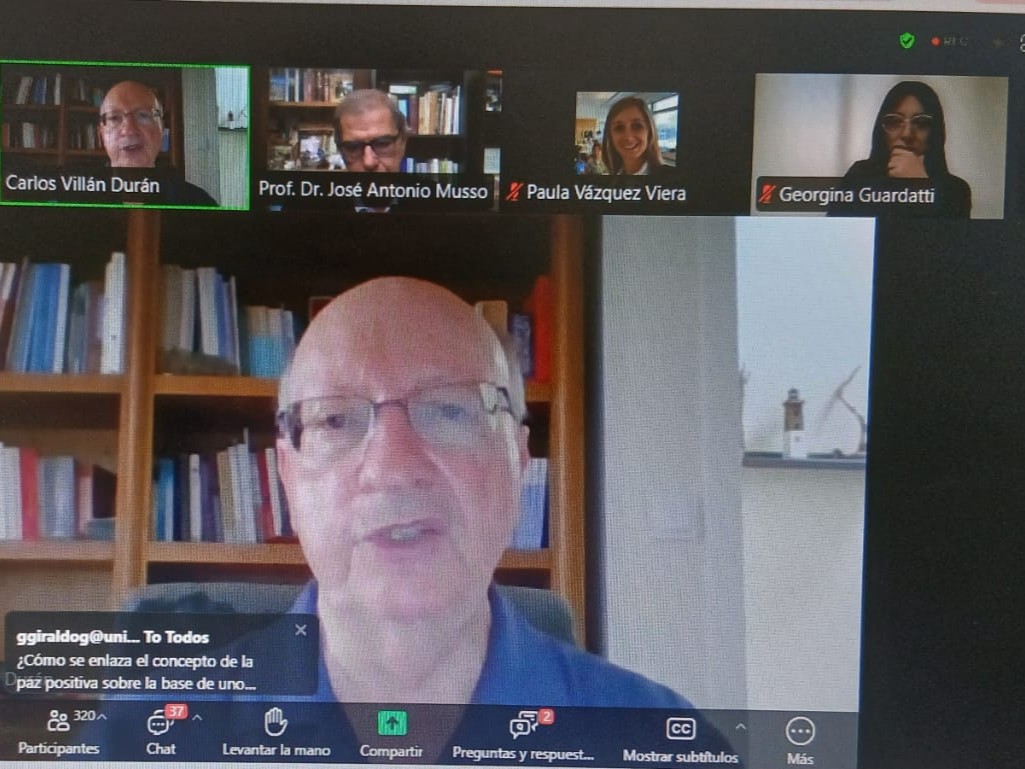
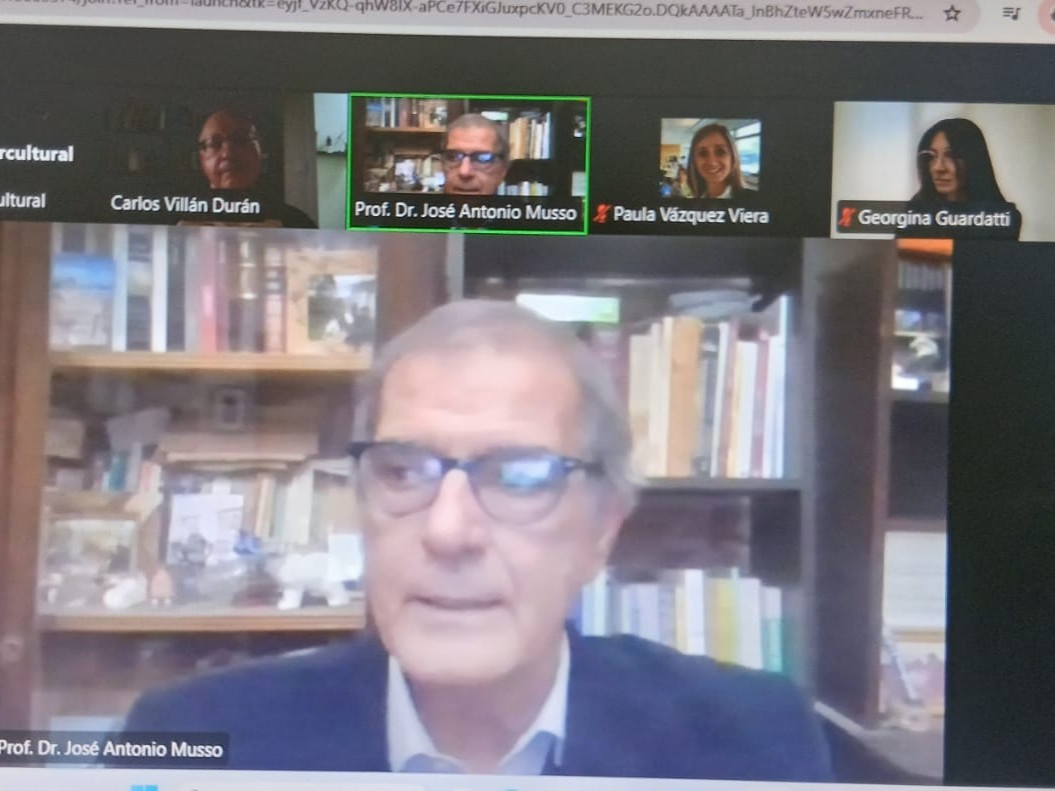
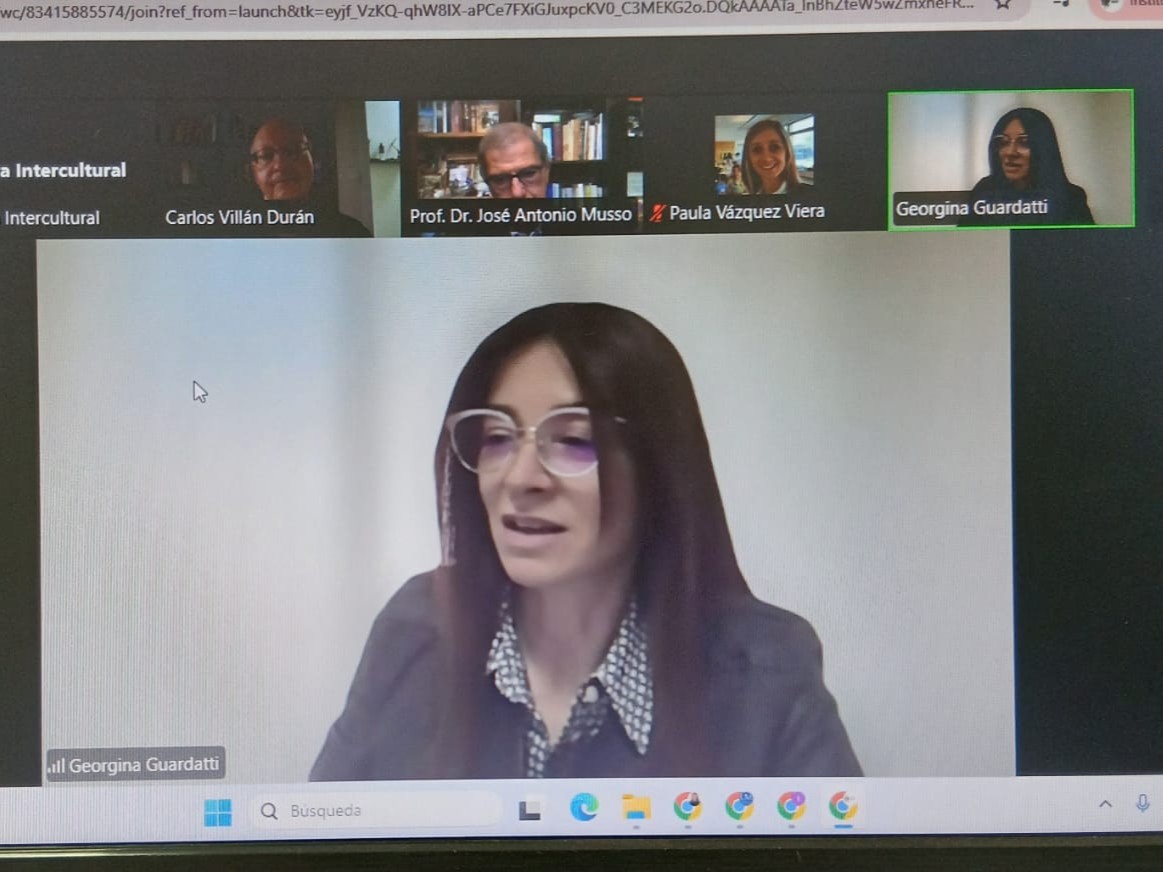
The initiative is coordinated by the Intercultural Chair of Education for Peace of the Universidad de Mendoza and propose
a journey of training, reflection and exchange around the challenges posed by building a culture of peace in the contemporary context.
Virginia Gamba paved the way: building peace to transform reality
The course opened on August 5th, XNUMX, with the opening conference of Virginia GambaEntitled “Building peace in the contemporary context: assumptions, opportunities and requirements for action”In his presentation, Gamba encouraged the audience to understand that becoming a peace agent involves developing personal skills and concrete tools to intervene in conflicts and contribute to transforming them into spaces of peace.
From the perspective of contemporary strategy, he highlighted the importance of prevention, management and actionas well as the need to observe and understand contexts before intervening. In this regard, he placed particular emphasis on the ability to listen without prejudice, act impartially, communicate transparently, and build credibility. He also noted that cooperation and the pursuit of shared benefits are fundamental conditions for sustaining a positive peace.
His lecture raised an idea that runs through the entire educational process: Building peace begins with each person and their immediate surroundingsBut it also requires preparation, patience, empathy, commitment, and courage to transform relationships and conflicts.
First meeting: an essential question, what is peace?
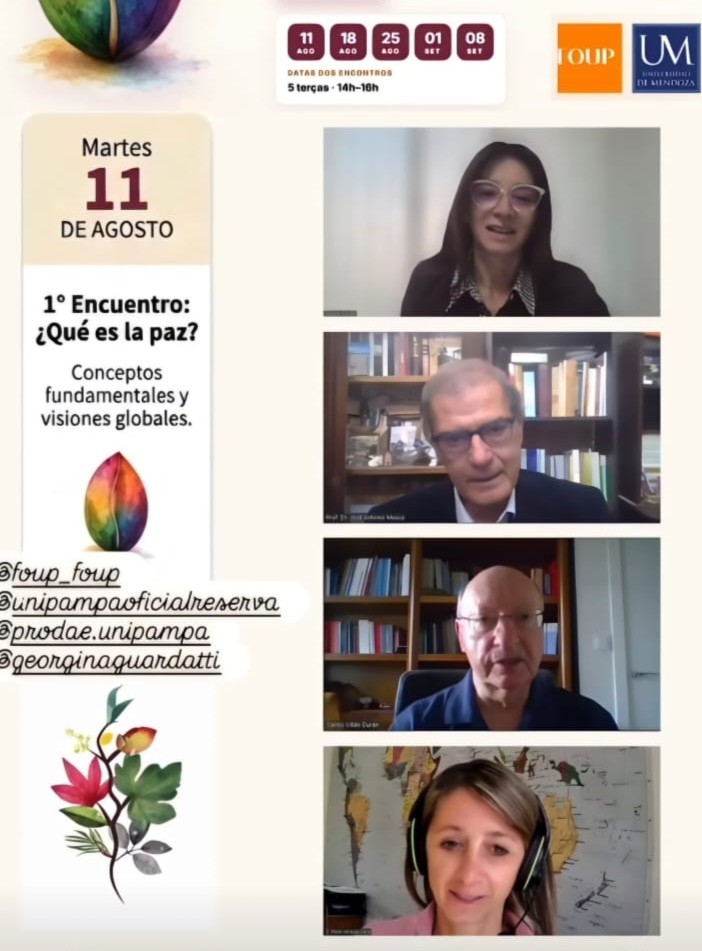
The first meeting of the Course took place on Tuesday, August 11, led by the professors Dr. Carlos Villán Durán and Dr. José Antonio Musso, who proposed to address a seemingly simple, yet profoundly profound question: What is peace?
The dynamics were structured based on a premise that would accompany the entire journey: “Sowing dialogue to cultivate peace”Instead of conceiving the meeting solely as an instance of knowledge transmission, dialogue, active listening, respect for the other's words, openness to different perspectives, and the collective construction of knowledge were promoted.
Throughout the day, the concept of the positive peace, understood not only as the absence of war or direct violence, but as a dynamic and participatory process aimed at addressing the root causes of conflicts and promoting social justice, cooperation and human rights.
Among the main topics covered were the Peace as a human right, its connection with integral well-being and human security, the different types of violence —direct, structural and cultural—, the principles of a culture of peace, conflict prevention, the processes of escalation and de-escalation and the role of emotions, empathy and listening in the peaceful transformation of relationships.
The meeting helped to reaffirm one of the central ideas of the proposal: Conflicts are part of human relationships, but we can learn to address and transform them in a different way.Being an agent of peace does not mean waiting for a world without conflict, but recognizing the capacity and responsibility that each person has to contribute, from their own place, to transforming their environment.
The invitation continues: next meeting, Tuesday, August 18
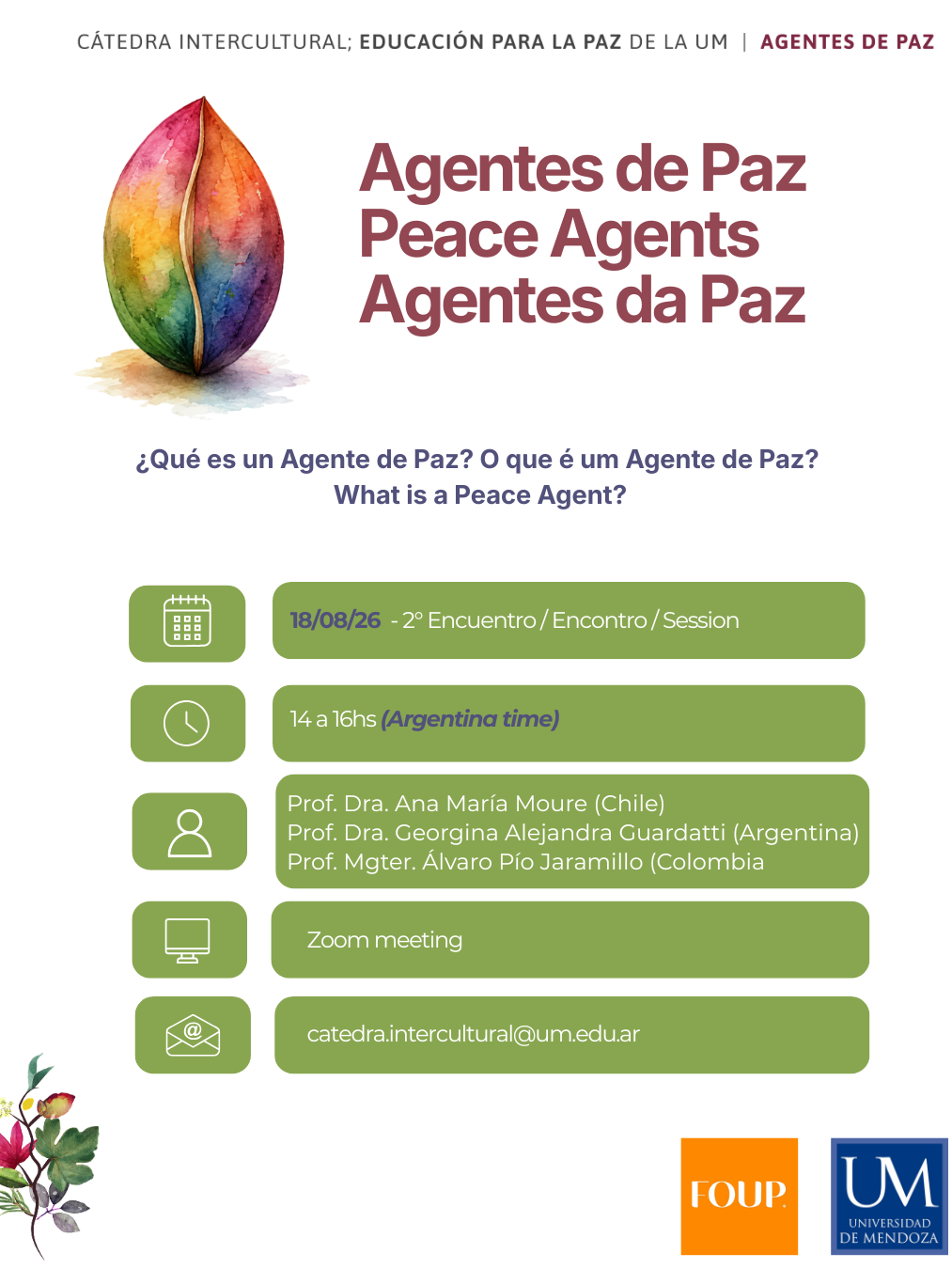
The course has just begun and Universidad de Mendoza and the Universities for Peace Forum invite those who wish to join to participate in the next meeting, which will be held on Tuesday, August 18, 2026, from 14 to 16 pm (Arg.).
It will be a new opportunity to continue learning, dialoguing and collectively building tools that allow us to transform conflicts and contribute to a culture of peace from different areas of action.
Because peace is not just an ideal we aspire to: it is a daily construction that requires everyone's commitment.
We invite you to join and be part of this international community of peace agents.
For more information, write to: catedra.intercultural@um.edu.ar